
A complete breakdown of what archery costs in the UK — from your first lesson to a full setup
Archery is a fantastic hobby that people of all ages can enjoy. But one of the most common questions we get asked is: how much does it actually cost to get into archery in the UK?
The honest answer is that it depends on how deep you want to go. You can have your first experience for as little as £10, or you can spend thousands on a competition-ready setup. The good news is that archery is one of the most accessible sports to try, because almost every club in the UK provides all equipment for beginners.
We’ve put together a full cost breakdown so you know exactly what to expect at every stage — from your very first lesson, through to joining a club, buying your own equipment and the ongoing costs that come with the sport.
For a quick summary of the total costs, go here.
How much does it cost to try archery for the first time?
If you’re not sure whether archery is for you, the cheapest way to find out is through a ‘have-a-go’ session. These are short taster sessions (usually around 1 hour) run by clubs, activity centres and commercial venues across the UK.
Typical cost: £10–£30 per person
Have-a-go sessions include all equipment and basic instruction. They’re a brilliant way to experience archery without committing to a full course. We have a guide to getting started in archery here which covers how to find these sessions near you.
Keep in mind that have-a-go sessions are just a taste. You won’t learn proper technique in an hour. To actually get into the sport, you’ll want to do a full beginner’s course.
How much does a beginner archery course cost in the UK?
A beginner’s course is the standard entry point into archery in the UK. Almost every Archery GB affiliated club runs them, and completing one is usually a requirement before you can join a club as a shooting member.
Typical cost: £50–£135
The price varies depending on location, club size and whether it’s a volunteer-run club or a commercial venue. Here’s what we’ve found across the country:
- Volunteer-run clubs (the majority): £50–£80 for 3–6 sessions
- Commercial venues and city-based clubs: £80–£135 for 5–6 sessions
- University clubs: Around £50 (often subsidised)
Most courses include all equipment, insurance for the duration of the course, and coaching from Archery GB qualified instructors. On completion, you’ll receive a certificate that allows you to join any Archery GB affiliated club in the UK.
What beginner courses typically cover:
- Range safety and etiquette
- Basic stance and posture
- How to hold a bow and arrow
- Drawing the bow
- Finding your anchor point
- Aiming
- Release and follow through
- Basic scoring
One thing to be aware of: popular clubs often have waiting lists for their beginner courses. It’s not unusual to wait 2–6 months, particularly for spring/summer outdoor courses. If you’re keen, register your interest with multiple clubs in your area as early as possible.
How much does it cost to join an archery club?
Once you’ve completed your beginner’s course, the next step is joining a club. This is where the costs start to layer up, because there are several separate fees involved.
Typical club membership fees
Typical cost: £30–£150 per year
Every club sets its own annual membership fee. Smaller, volunteer-run clubs in rural areas tend to be cheaper (£30–£60), while larger clubs with their own facilities, indoor ranges or prime locations can charge £100–£150 or more.
Some clubs also charge a session fee each time you shoot (typically £2–£5), while others include unlimited sessions in the annual membership.
Archery GB (AGB) membership
Current cost (2025/26): £65 per year for adults
On top of your club membership, you’ll need to join Archery GB — the national governing body. This is mandatory for shooting at any AGB-affiliated club and provides:
- Public liability insurance while shooting at any affiliated club or competition
- Eligibility to enter competitions
- Access to the handicap and classification system
- Archery UK magazine (twice yearly)
- Member discounts on equipment
AGB membership has been rising in recent years. The fee was £60 in 2024/25, is £65 for 2025/26, and is planned to increase to £70 for 2026/27. Under-21 membership is available at a reduced rate.
https://archerygb.org/get-involved/become-a-member
Important: Since October 2024, AGB membership works on a personal anniversary system rather than a fixed annual renewal date. This means your membership lasts a full 12 months from whenever you join, so there’s no penalty for joining mid-year.
NFAS membership (for field archery)
Current cost: approximately £20 per year for adults
If you’re interested in field archery (shooting at 3D animal targets in woodland courses — quite different from target archery), you’ll join the National Field Archery Society (NFAS) instead of or in addition to AGB. NFAS membership is significantly cheaper and also includes insurance cover.
NFAS clubs often have a separate induction process and may require you to be ‘signed off’ by a coach before granting full membership.
County and regional fees
Typical cost: £5–£15 per year
On top of AGB membership, most archers also pay a small annual fee to their county and regional archery association. These are usually collected by your club alongside the AGB fee. They fund local competitions, coaching development and regional administration.
So what’s the total annual cost of club membership?
Adding it all up for a typical AGB-affiliated club:
| Fee | Typical Annual Cost |
|---|---|
| Club membership | £30–£150 |
| Archery GB membership | £65 |
| County/regional fees | £5–£15 |
| Session fees (if applicable) | £0–£200 (£2–£5 per session) |
| Total | £100–£430 per year |
How much does archery equipment cost?
This is where costs can escalate quickly — but the key message is: don’t rush into buying your own equipment.
Should you buy equipment straight away?
No. This is one of the most common mistakes new archers make. Our beginner buying guide covers this in detail, but the short version is:
- Your draw length, draw weight preference and bow style preference will change significantly in your first 6–12 months
- Buying too early often means buying twice
- Most clubs have equipment you can borrow or hire
- Your coaches can advise you on what to buy and when
Hiring club equipment
Typical cost: Free to £15–£30 per month
Many clubs let new members use club equipment for free for the first few months (some even include it in the beginner course fee). After that, a monthly or quarterly hire fee may apply. The Foxes Archery Club in Leicestershire, for example, charges £15/month for the first five months and £30/month thereafter — which is a strong incentive to buy your own kit eventually.
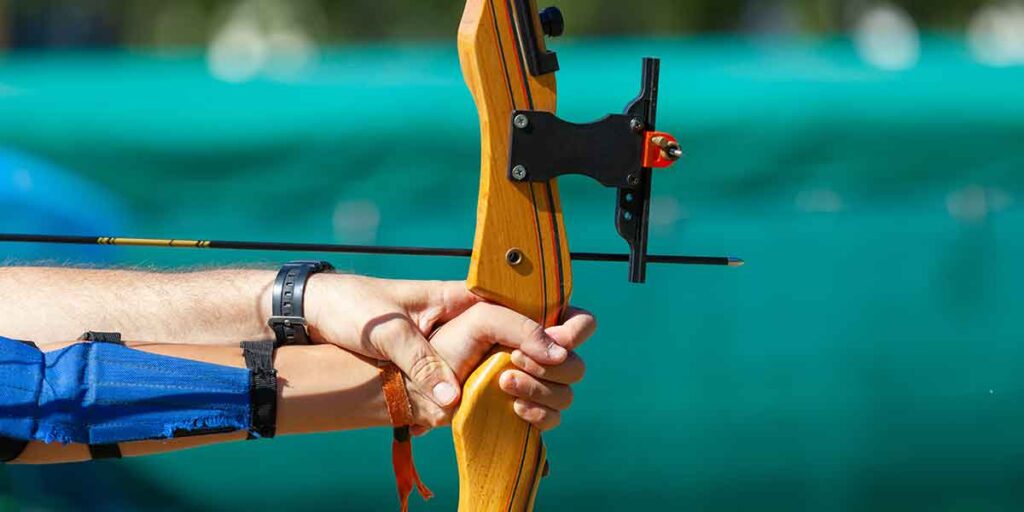
Beginner recurve setup costs
When you’re ready to buy (typically 3–12 months after starting), a beginner recurve setup is the most common first purchase. Here’s what you’ll need and what to budget:
| Item | Budget Range | Notes |
|---|---|---|
| ILF riser (aluminium) | £60–£150 | An ILF riser lets you swap limbs as you progress |
| Limbs (low poundage, 18–26#) | £40–£80 | You will outgrow these — budget for replacements |
| Arrows (set of 6–8) | £30–£60 | Must be matched to your draw length and bow weight |
| String | £8–£15 | Or have your club make one |
| Finger tab | £5–£20 | |
| Arm guard | £5–£15 | |
| Arrow rest | £3–£10 | |
| Bow stringer | £5–£10 | Essential — never string a recurve without one |
| Quiver | £10–£30 | Hip or back quiver |
| Bow bag/case | £20–£50 | For transport — important for carrying your bow safely |
| Total beginner setup | £186–£440 |
Where to buy in the UK:
- Merlin Archery (online, based in Loughborough — see our full review)
- Quicks Archery (online and physical shop in Waterlooville)
- Alternative Sporting Services (wide range, competitive prices)
- Second-hand: ArcheryInterchange forums, Facebook groups, club noticeboards
Intermediate upgrade costs
After 1–2 years, many archers upgrade to higher-poundage limbs and add accessories like a sight, stabilisers and a clicker. This is where costs can climb:
| Item | Budget Range |
|---|---|
| Higher-poundage ILF limbs | £60–£200 |
| Recurve sight | £30–£150 |
| Long rod stabiliser | £40–£120 |
| V-bar and short rods | £30–£80 |
| Clicker | £5–£15 |
| Upgraded arrows (matched set) | £60–£120 |
| Bow stand | £15–£30 |
| Better finger tab | £20–£50 |
| Typical intermediate upgrade | £260–£765 |
Total spent to this point (beginner setup + upgrades): roughly £450–£1,200
It’s worth noting that many archers sell their beginner limbs and accessories when upgrading, which helps offset costs. The second-hand market in UK archery is quite active.
Compound bow setup costs
If you decide to go the compound route (less common in UK clubs but growing), expect higher upfront costs:
Typical complete compound setup: £500–£1,500+
Compound bows are more mechanically complex and generally more expensive than recurves. They also require professional setup (typically done by a specialist archery shop) to set the draw length, draw weight, cam timing and arrow rest correctly.
Traditional bow costs (longbow / flatbow)
Trad archery has a strong following in the UK, particularly in field archery (NFAS). Traditional setups are often simpler and can be cheaper:
| Item | Budget Range |
|---|---|
| Longbow or flatbow | £100–£500+ (custom English longbows can be £300–£800) |
| Wooden arrows (matched set of 6) | £40–£80 |
| Tab, glove and arm guard | £15–£40 |
| Quiver | £15–£50 |
| Total | £170–£670 |
Ongoing costs of archery
Once you’re set up and shooting regularly, archery has relatively low ongoing costs compared to many sports. Here’s what to budget annually:
| Ongoing Cost | Annual Estimate |
|---|---|
| Club + AGB membership (renewal) | £100–£230 |
| Replacement arrows (you WILL lose and break them) | £30–£80 |
| String replacement (every 1–2 years) | £8–£20 |
| Competition entry fees (if competing) | £5–£15 per competition |
| Travel to shoots/competitions | Varies |
| Equipment maintenance and minor replacements | £20–£50 |
| Typical annual ongoing cost | £160–£400+ |
Arrows are your biggest recurring expense. They wear out, they break, they get lost (especially in field archery). We covered safe arrow practices in our archery at home guide — arrows with visible wear or damage should always be retired. Budget for at least one new set per year.
How to save money on archery in the UK
Archery doesn’t have to break the bank. Here are some practical ways to keep costs down:
Buy second-hand. The UK archery second-hand market is thriving. Check ArcheryInterchange forums, Facebook groups (search for “archery buy sell UK”), and your own club’s noticeboard. ILF risers and limbs hold their value well and are safe to buy used.
Don’t overbuy on day one. You don’t need stabilisers, a sight, a custom-made tab and top-end arrows when you’re starting out. Buy the basics, shoot for six months, then upgrade deliberately based on what you actually need.
Use club equipment for as long as your club allows. There’s no shame in hiring. Most clubs actively encourage it.
AGB membership discounts. Your AGB membership includes discounts at several archery retailers and at Decathlon. Check the member benefits page when you join.
Make your own target at home. If you’re practicing archery at home, you can save money on targets by using stacked cardboard, old carpet offcuts or cheap foam tiles rather than buying a branded target boss.
Volunteer at your club. Many clubs offer reduced membership to members who help with coaching, range setup, or administration. It’s also a great way to learn faster and meet people.
Summary: Total cost of archery in the UK
Here’s a realistic overview of what archery costs at each stage:
| Stage | One-Off Cost | Annual Recurring |
|---|---|---|
| Have-a-go session | £10–£30 | — |
| Beginner course | £50–£135 | — |
| Club + AGB membership | — | £100–£430 |
| Beginner equipment (after ~6 months) | £186–£440 | — |
| Intermediate upgrades (after ~1-2 years) | £260–£765 | — |
| Ongoing costs (arrows, strings, entries) | — | £60–£150 |
To summarise:
- Trying archery costs as little as £10–£30 for a have-a-go session
- Getting started properly (course + first year of membership) costs roughly £150–£565 with no equipment purchase
- Your first year all-in (course + membership + beginner equipment) costs roughly £336–£1,005
- Annual ongoing costs after the first year settle to around £160–£400
Compared to many sports, archery offers excellent value. There are no pitch fees, no expensive consumables on every outing, and most of your equipment will last years if maintained properly.
If you found this guide helpful, check out our other resources: